
Interview: AI capability building with the CEO of King Living
David Woollcott is the CEO of King Living, during his four year tenure he has overseen the opening of 12 new showrooms, establishment of a digital team, revenue has grown substantially and KING launched into the US market. He also drove an AI adoption program for KING, and is currently studying Applied Agentic AI with MIT.
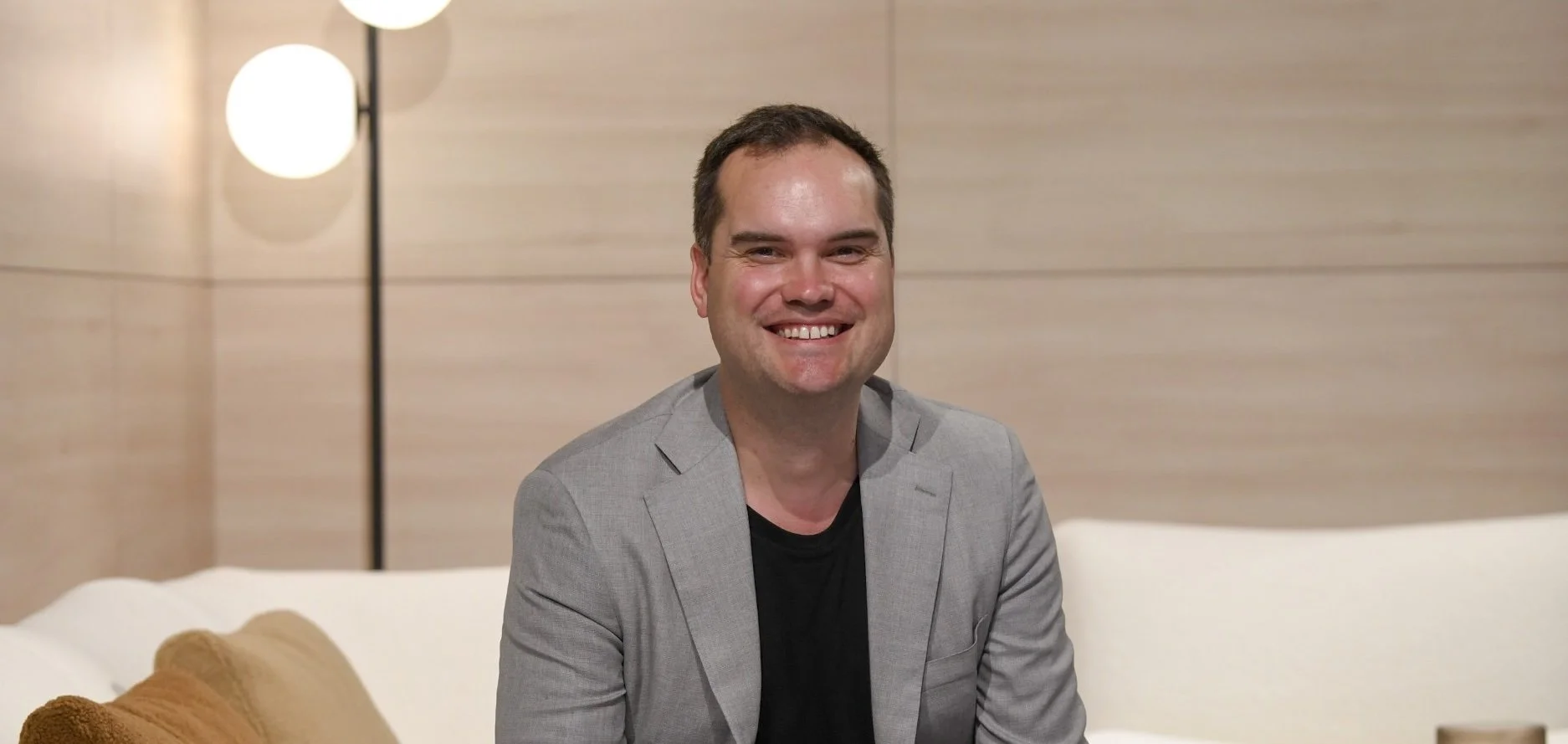
David, take us back to your first experience with generative AI. What did you try, and what did you make of the result?
The speed struck me first. You could ask a question and almost immediately have something that looked considered and credible. Then you read it more closely! Some was useful, some generic, and some needed challenging.
I remember the excitement and suspicion. What would this mean for how we worked, and how would we know when it was wrong?
You need enough knowledge to judge the answer, and enough curiosity to keep asking. Otherwise you have found a quicker way of sounding well informed.
I remember trying to work through a travel plan when I was in London, unfortunately it wasn’t that helpful!
Was there a moment when AI became something you felt you needed to act on as CEO at KING?
People were already experimenting, but with very different levels of knowledge and confidence. We needed to get across it together to prevent teams spearing off in different direction. All well intentioned but not at all coordinated.
There was too much potential to leave it to a few interested people or assume it belonged to IT.
At KING, design, engineering, manufacturing and retail all need to work together. I wanted us to understand what AI could mean across that whole business, including the customer experience, before deciding where to invest resources. People needed room to ask questions without feeling behind, and a shared understanding of both the possibilities and the limitations. Importantly I didn’t want me to decided, I didn’t have the required knowledge of all areas so needed to consult with my wider team who already had enthusiasm for this emerging tool.
How has your view of AI changed since those early experiments?
In 2023 and 2024, I didn’t know what I didn’t know! I was interested in what the tools produced. Now I think more about the information behind them and what happens after the answer appears.
A good result on your laptop is one thing. Making it useful across a business is harder.
The MIT course has given that thinking more structure, and reinforced what you encouraged early on. I’m still enthusiastic, but more interested in what changes for a customer or colleague than a clever demonstration. The retail tools such as Claude and ChatGPT have taken the lime light, there are many many more options for individuals and companies depending on cost, budget, complexity and specialism.
AI at KING
When we started working together on AI at KING, what were you hoping it would help the business achieve?
I wanted to improve people’s work (quality & speed) and the customer experience. Businesses spend huge amounts of effort finding, preparing, passing on and checking information. If we reduced that, what else could people do with the time? I also recognised it as a tool to collaborate in ways industry hasn’t yet defined.
I also wanted an honest view of our foundations. Where was our technology good, our data unreliable, or our coordination poor.
Buying a platform doesn’t automatically mean progress. I wanted us to understand the opportunity, then put our effort into better service, better decisions and less avoidable work.
We brought people together for training and then developed a roadmap with your executive and marketing teams. What do you remember about the conversations in those sessions?
The range of knowledge was striking. People had tried different things and brought different perspectives. That was useful, provided they talked openly.
There was also some posturing and showboating which frustrated me. We all had plenty to learn. If you have to sound like an expert, you won’t ask the basic question half the room is probably thinking. I wanted people to share what worked and where they needed help. The training helped us do that, and see opportunities beyond our own departments and needed. It was a golden opportunity to rethink the customer journey. Start with the required CEX and work backwards into the workflows and teams.
Which ideas from that roadmap have proved most useful- and which have been harder to put into practice?
Product imagery was a tangible example. People could see why it might matter to the online experience, and we had something concrete to discuss.
The shared understanding also helped us judge which ideas deserved attention.
The harder part was bringing an experiment into everyday use: connecting systems, agreeing ownership and making the information dependable. None of that disappears because a demonstration looks good.
I would be careful about claiming unmeasured results. An interesting prototype and something people use reliably every day are quite different achievements. That gap is where the less glamorous work sits, and where an owner needs to stay involved after the initial excitement of a potential breakthrough.
What evidence do you look for to decide whether an AI initiative is delivering value?
What is better, and for whom? Has the customer received a better answer or a quicker, more accurate outcome? Is the team actually using it? Has laborious, low engagement work been removed or simplified. Is the King Living team having a better day?
In a business, I would then ask what we do with any gained time. More attention to customers, better decisions, or work we couldn’t previously reach? That is where value becomes real and it is so easy to pile on with more, low value work to fill 38.5 hours per week!
Where else is AI being used at KING today that people outside the business might find surprising?
Product imagery is a good example. People think about AI writing copy; improving how a physical product is presented is particularly relevant in furniture. But colour, texture and proportions matter. If the image looks wonderful and the customer receives something different, you have created a problem, however efficient the process. Similar for luxury or premium businesses, customer pour over imagery, words and content. Cheap and fast won’t cut it. Recently I have been disappointed by some brand who have taken short cuts – it shows and erodes brand value.
What has been harder: getting the technology to work, or changing how people work?
Both! But if I was to choose it is changing how people work…together, without doubt. Individuals often contribute a huge amount, the magic comes when minds meet, teams are redesigned and technology is deployed together.
AI exposes unclear responsibilities, inconsistent information and processes nobody owns. “That’s how we’ve always done it” becomes irrelevant today from an organisational development stand point.
People also need to feel comfortable asking for help, sharing mistakes and questioning convincing answers. That takes trust, fear, blame & shame need to be removed.
We may need to rethink traditional functional structures, too. Work moves across departments; the customer certainly doesn’t experience, or case about, our organisational chart! Designing how people and technology work together could change how we organise businesses.
How much does the CEO’s own use of AI influence whether the rest of the business embraces it?
A great deal. People notice whether the CEO actually uses what they talk about. Are they sharing in the learning, demonstrating a growth mindset and willing to experiment with others. You can’t ask everyone else to learn while staying on the sidelines. Try it, get something wrong, ask for help and share what you find useful.
The CEO doesn’t need to be the technical expert, but must understand the consequences for customers and colleagues. Delegating the edges of the workflows and technology is sensible; delegating understanding and willingness to participate is a mistake in my view.
What do you say to someone who worries that becoming more efficient with AI could put their job at risk?
It is a reasonable concern. Nobody can promise every role will stay as it is, or even in place.
We need to give people a proper opportunity to develop, and use their knowledge of customers, products and operations more effectively as repetitive work changes. “Embrace AI” isn’t enough. Give people time to learn, involve them in decisions and explain what you want to achieve. Invest time personally with individuals and teams.
If every improvement someone suggests makes their position feel less secure, why would they share it? We need to think that through and be clear about what is in it for them.
KING’s products depend on design, engineering and craftsmanship. Where can AI contribute, and where is human judgement essential?
AI can help with research, customer feedback and exploring ideas more quickly.
But a sofa is something you live with. You sit on it, touch it and expect it to perform for years. A beautiful image cannot tell you whether the comfort is right, a mechanism feels properly engineered, or a material will wear well. My materials science and engineering background makes me interested in what sits beneath the 2D appearance. That needs 4D physical testing and experienced people who understand comfort deeply. Responsibility for what gets made, and what the customer receives, still belongs to us. You also need people who can recognise when an attractive suggestion will fail in manufacturing or logistics, or disappoint the customer after years of use.
What would you do differently if you were starting KING’s AI journey again today?
I would spend more time on our starting point. In 2023 and 2024, I underestimated how much information quality and clear processes would matter. I would be more specific about experiments, too. What are we improving? Who owns it? Give them documented project names. What would make us continue or stop? Old school questions become more important when ideas come so quickly.
And I would set a stronger expectation around sharing and humility. Asking a basic question or admitting failure should help everyone learn. The workshop energy needs to carry into the working week.
David’s own use
Walk me through a recent day. Where did you personally use AI?
My email and calendar review runs at 6 am. Over coffee, I review suggested responses, edit them and decide what to send. It saves about half an hour.
This week I’ve also been researching AI and e-commerce alongside my course, exploring what developments could mean for retailers, manufacturers and how customers choose products. New tools are sprouting up daily. As well as the AI course I am doing, I also sit in front of YouTube for 2 or so hours per week watching presentations from leading edge companies, it is an incredible resource to do some ‘sit back’ learning.
Can you share an example of AI helping you think through a difficult leadership decision?
I find it useful for challenging how a team should be organised, rather than making the decision.
Give it the outcome, capabilities and constraints, then ask it to challenge your approach. Where might it fail? What have you assumed? What would the customer see? Other perspectives can help, including legal ones checked with an expert.
As a leader, you can get attached to your explanation of a problem. Pushback makes you look again. It doesn’t know the people as you do, or carry the consequences.
Outside work, what’s the most unexpected thing you’ve used AI for?
Planning our Coogee to Noosa road trip. EV charging stops, lunch, timing and traffic; quite a few moving parts! Following my first experience in London, the technology, and my prompting have both improved!
I also use it to follow personal interests in cars, architecture, travel and design. One question, and suddenly you’re well into the engineering behind something.
Has using AI changed how you learn, pursue an interest or organise your personal life?
Without doubt. I can follow a question while it’s still in my head, rather than make a note and never return to it. Each answer opens another avenue which I hadn’t considered. LLM’s ‘next best answer’ is fits learning methodology very well indeed! The MIT course adds structure alongside my experiments and conversations with people who know more than I do.
The learning becomes most interesting when I connect it to a business, industry or product I already understand. What changes in manufacturing? How would a premium retailer use it? What would the customer gain? How can the team develop? What are the financial levers? This makes it very valuable & meaningful.
Personal views and the future
What do you believe about AI that other business leaders might disagree with?
Premium and luxury businesses should be careful about automating the customer experience. People pay for the relationship, expertise and feeling that somebody cares. Removing the person may weaken what they came for. I feel chatbots are overrated in premium and possibly do more to damage retention that to support it currently.
I also think AI could make differentiation more important. Customers comparing products against their own needs may look beyond advertised price to quality, provenance, reliability and other customers’ experiences. Vertically integrated manufacturers could show more of what sits behind their products.
Exciting for strong businesses; uncomfortable for those relying on customers not looking closely! Product and company information will matter enormously. For me, this could give authentic brands an advantage, provided they can explain their quality clearly and support the claims they make with reliable detail. Marginal ‘me-too’ companies will have challenges, as they always have.
Does AI make you more optimistic about the future? What gives you confidence, and what concerns you?
Yes, but I do predict issues. Wider access to knowledge and capability has huge potential, particularly in healthcare and environmental problems, as well as giving people time back. But confident language can be seductive and there remains enormous cyber risks which government agencies are now fretting about more and more.
As a parent, I worry about children missing the learning processes that comes from working something out themselves, step by step. “AI can do that” isn’t a reason to stop learning it, or to go through the brain work needed to develop critical thinking, reasoning, self confidence, art, play and a personality!
I want us to be ambitious while protecting the judgement, relationships and curiosity that make us human.
What responsibility do business leaders have to prepare their people for the changes ahead?
Invest our own time, as well as company money. Buying licences and telling people to get on with it isn’t a plan. The focus now needs to be on training the ability for the AI world. People start from different places and are at difference phases in their careers. Give them time to practise, access to tools and someone they can ask without feeling ignorant. Explain how the work is changing (in your own business) and involve those who understand it. Many see the opportunities before leadership does. We won’t have every answer, but that isn’t an excuse to leave people working it out alone.
For a CEO who is still watching from the sidelines, what would you encourage them to try this week?
Use it yourself on something you understand well enough to judge. Give it proper context, then challenge and improve the answer. My email and calendar routine is a good start. Half an hour back each day makes you pay attention! Or investigate a business question and ask it to argue against your view. Discuss what you find with someone experienced, and involve your team.
You don’t need the whole strategy worked out before starting, just your own experience to make sensible decisions about what comes next.